If you ever wander the busy streets of Cairo, you’ll spot food vendors everywhere, each serving up steaming bowls of something that looks like chaos but tastes like pure comfort. Koshari is that dish—a riot of rice, lentils, pasta, chickpeas, and crispy onions, all drenched in a tangy, spiced tomato sauce.
It’s not just a meal; it’s a slice of Egyptian cuisine history. Koshari proudly wears the crown as Egypt’s national dish, and honestly, it deserves the hype.
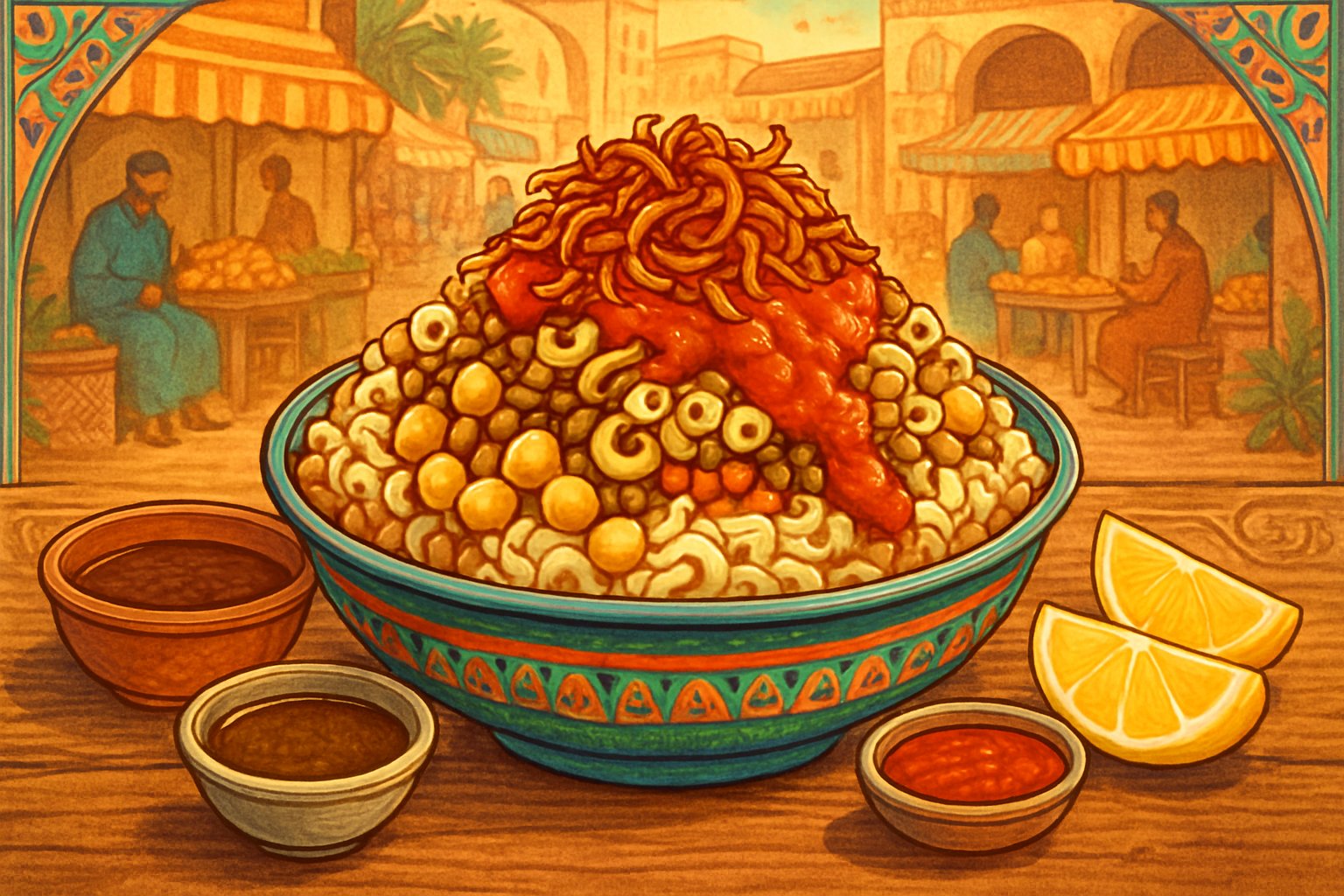
This guide digs into the authentic recipe, the dish’s backstory, and its place in Egyptian culture. Koshari is a mashup of Indian, Italian, and Middle Eastern influences, but at its core, it’s uniquely Egyptian—feeding millions every day.
We’ll break down the ingredients, the layering (yes, it matters), and how to get the flavors just right. If you’ve ever wanted to bring a taste of Egypt home, you’re in the right place.
Key Takeaways
- Koshari is Egypt’s national dish: rice, lentils, pasta, chickpeas, crispy onions, and spiced tomato sauce.
- It came together in the 19th century, blending Indian, Italian, and Egyptian cooking during British rule.
- Getting it right means careful layering and knowing how to cook each part for that perfect bite.
What Is Koshari?
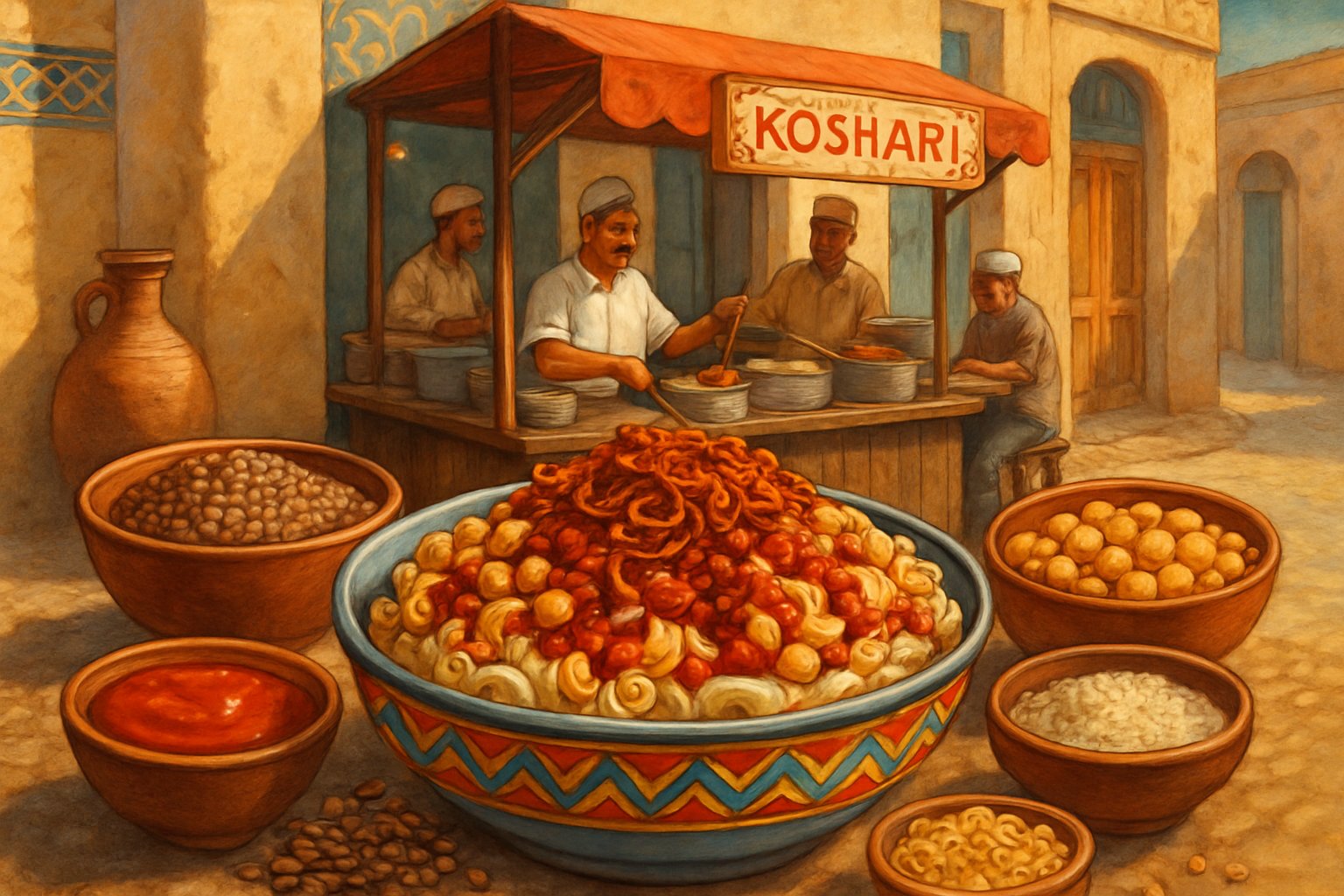
Koshari is Egypt’s answer to comfort food: a bowl stacked with rice, lentils, pasta, chickpeas, and fried onions, all blanketed in spiced tomato sauce. It’s a vegetarian street food that’s hearty, cheap, and seriously filling.
You’ll find it everywhere, from street carts to family kitchens. The flavors are bold, the textures are layered, and the whole thing just works.
Core Components and Flavors
At its heart, koshari is about balance. You start with rice and brown lentils, each cooked separately.
Then comes the pasta—usually small macaroni shapes that mix in without taking over.
Chickpeas join the party, bringing protein and a little heft. They’re soft, warm, and a nice contrast to the rice and lentils.
The real magic? That tomato sauce. It’s spiked with garlic, cumin, and a few other Egyptian spices, making it tangy and rich.
Crispy fried onions always go on top. They’re sweet, crunchy, and absolutely essential.
Some folks add kamouneyah—a cumin-garlic sauce that brings a spicy kick. Every bite is a mix of soft, chewy, and crunchy.
Why Koshari Is Egypt’s National Dish
Koshari is everywhere. Doesn’t matter if you’re rich or broke—you’ll find it on street corners, in restaurants, and at home.
The ingredients are cheap and filling. Rice, lentils, and pasta are staples in pretty much every Egyptian pantry.
The dish has roots that go way back. Ancient records mention versions of koshari long before the British or anyone else showed up.
Street vendors keep it alive, dishing out bowls to workers, students, and families looking for a quick, satisfying meal.
Koshari is about resourcefulness and community. Families often cook up huge pots together, making it a social event as much as a meal.
Comfort Food Appeal
For Egyptians, koshari is the ultimate comfort food. There’s something about the warmth and heartiness that just hits the spot.
Each part brings its own texture—the rice and lentils are soft, the pasta is chewy, and the onions are crunchy. The tomato sauce ties it all together.
People eat koshari at any hour—lunch, dinner, or late-night from a street cart.
It’s cheap but filling. One bowl packs enough nutrition to keep you going for hours.
For Egyptians abroad, koshari is nostalgia in a bowl. The taste brings back memories of family and home.
The History and Cultural Significance of Koshari
Koshari didn’t just appear out of nowhere. It’s the result of centuries of Egyptian culinary tradition, mixed with a little outside influence, and a lot of local pride.
Origins and Global Influences
Koshari’s roots dig deep into ancient Egypt. Food historians say Egyptians made early versions of it long before foreign flavors arrived.
Then came the 19th and early 20th centuries. Italian immigrants brought pasta, which found its way into the classic rice and lentil combo.
Indian spices also slipped in, thanks to trade routes connecting Egypt to the subcontinent. Cumin, coriander, and other spices became staples in koshari’s tomato sauce.
The addition of pasta changed everything. Suddenly, koshari became a layered, complex dish—proof that Egyptians know how to make outside influences their own.
Koshari in Egyptian Social Life
Street vendors in Cairo and Alexandria made koshari a meal for everyone. It started as cheap fuel for workers and families.
But it didn’t stay humble for long. Rich or poor, everyone eats koshari now.
During Ramadan, it’s a favorite iftar dish, giving people the energy they need after fasting all day.
Vendors still shape koshari culture, serving it from carts and tiny shops. They keep the tradition alive and make sure it’s always within reach.
Koshari as a Symbol of Unity
Koshari is all about harmony. It’s a bunch of ingredients that seem like they shouldn’t work together, but somehow they do.
Each part keeps its own flavor but also adds to the whole. Rice gives substance, lentils bring protein, pasta adds heart, and fried onions finish it off.
This dish is Egypt in a bowl—a mix of Arab, African, and Mediterranean influences, all blended into something uniquely Egyptian.
Koshari doesn’t care about your background. Laborers, students, office workers—they all line up for the same bowl.
Essential Ingredients for Authentic Koshari
You need six main groups to make real koshari. Get these right, and you’re halfway there.
Rice and Lentils
Egyptian rice is ideal, but honestly, long or medium-grain rice works too. The key is fluffy, separate grains.
Rinse the rice until the water runs clear. That gets rid of excess starch and keeps things from getting sticky.
Toast the rice in a little oil before adding water. It adds flavor you don’t want to miss.
For lentils, go with brown or green—they hold up during cooking. Red lentils turn mushy, so skip those.
Cook the lentils in seasoned water, but don’t overdo it. You want them tender, not falling apart.
Rice and lentils together make a protein-packed, balanced base.
The Pasta Layer
Elbow macaroni is the classic choice. It mixes in easily and holds the sauce well.
You can swap in ditalini or small shells. Some families use vermicelli, toasting it with the rice for extra texture.
Cook the pasta separately, just until al dente. Overcooked pasta will fall apart when you mix everything.
Avoid long noodles like spaghetti. You want something you can scoop up with a spoon.
If you use vermicelli, break it into small bits and toast it with the rice before adding water.
Chickpeas and Plant-Based Protein
Chickpeas bring protein and a nutty flavor. Canned ones are fine if you’re in a hurry, but dried chickpeas taste better.
If you use dried, soak them overnight and cook until they’re soft. The texture is worth the extra time.
Lentils and chickpeas together make koshari filling and nutritious, even with no meat in sight.
Rinse canned chickpeas before adding them. Some people like to warm them up a bit first.
Spices and Seasonings
Cumin is everywhere in koshari. It goes into the lentils, the tomato sauce, and even the rice sometimes.
Coriander adds a citrusy note that balances the earthiness. Freshly ground is best, but powder works too.
Salt each part as you go. Don’t just dump it all in at the end.
A little black pepper, garlic, and maybe a bay leaf round out the flavor. Some families toss in allspice or cinnamon for depth.
Start with less spice, taste, and adjust. Every family has their own twist.
Sauces and Toppings: Creating Signature Koshari Flavor
Koshari’s soul lives in its sauces and toppings. The tomato sauce, crispy onions, garlic-vinegar, and chili oil all add layers of flavor you can’t skip.
Tomato Sauce and Variations
Classic koshari tomato sauce starts with crushed tomatoes or tomato paste. Add diced onions, minced garlic, and Egyptian spices like cumin and coriander.
Simmer everything for 15-20 minutes until it comes together.
Basic Tomato Sauce Recipe:
- 1 can crushed tomatoes (14.5 oz)
- 2 tablespoons tomato paste
- 1 diced onion
- 3 cloves minced garlic
- Egyptian spices to taste
Want it spicy? Add chili powder or cayenne. Prefer it smooth? Blend the sauce after cooking.
Some add a splash of vinegar for tang. Street vendors often guard their recipes, but most follow this basic idea.
The sauce should be thick enough to coat a spoon. That’s when you know it’s ready.
Crispy Fried Onions
No koshari is complete without a pile of fried onions on top. They add crunch and sweet, rich flavor that balances the rest.
Slice yellow onions thin. Heat oil in a big pan over medium and cook the onions slowly, stirring often.
Tips for Great Onions:
- Slice evenly so they cook at the same rate.
- Don’t crank up the heat—patience pays off.
- Stir them so they don’t burn.
- Stop when they’re deep golden brown.
Save the onion-flavored oil if you want—drizzle it over the finished dish for extra depth.
The onions should be crispy, not burnt. You can make them ahead, but fresh always tastes best. Store-bought just doesn’t compare.
Garlic-Vinegar and Spicy Sauces
Garlic-vinegar sauce gives koshari its unmistakable tang. It cuts right through all those carbs and brings a bright, sharp edge.
To make it, just mix minced garlic with white vinegar. Let it sit for at least half an hour so the flavors meld.
Traditional Garlic-Vinegar Sauce:
- 1/4 cup white vinegar
- 4 cloves minced garlic
- Pinch of salt
A lot of people also love a spicy sauce called shatta. It’s essentially chili flakes, garlic, and vinegar—sometimes with lime juice or a bit of chopped parsley tossed in for a fresher touch.
Some folks use cayenne for a milder heat, while others go all-in with hotter chili powders. You can dial it up or down, depending on your mood.
These sauces usually sit on the side. People drizzle them on their koshari to taste.
Step-by-Step: The Authentic Koshari Recipe
Making koshari the traditional way means cooking each part separately, then bringing them all together. Timing and texture really matter—every ingredient needs its moment to shine.
Preparation and Cooking Techniques
Rice Preparation
Rinse 2 cups of long-grain rice until the water runs clear. Heat 2 tablespoons olive oil in a medium pot, then add the rice and 1 teaspoon salt.
Toast the rice for a minute or two. Pour in 3 cups water, bring it to a boil, then lower the heat and cover.
Let it simmer for 18-20 minutes. Don’t peek under the lid.
Lentil Cooking
Rinse 1 cup brown or green lentils well. Put them in a pot with 4 cups water, 1 teaspoon cumin, and 1/2 teaspoon salt.
Bring it all to a boil, then cover and simmer for about 20-25 minutes. The lentils should be tender but not falling apart.
Drain off any extra water.
Pasta and Chickpea Preparation
Boil 1 pound elbow macaroni in salted water until it’s just al dente. Follow the package—no one wants mushy pasta.
Drain and rinse a 15-ounce can of chickpeas. Set both aside.
Crispy Onion Technique
Slice 3 big onions as thin as you can get them. Heat up 1 cup vegetable oil in a large skillet over medium-high.
Fry the onions in batches—don’t crowd them. Cook for 10-15 minutes until they’re golden and crisp.
Scoop them out with a slotted spoon and let them drain on paper towels.
Save 1/4 cup of that onion oil for the spicy sauce.
Assembling and Serving Koshari
Layering Order
Layer everything in bowls or a big serving dish. Rice goes first, then lentils, then macaroni, and finally chickpeas.
This way, every bite has a little bit of everything. The rice soaks up the sauces but keeps its texture.
Sauce Application
Top the layers with warm tomato sauce—crushed tomatoes, garlic, vinegar, and spices. The sauce should be thick enough to cling but not drown the dish.
Drizzle on chili garlic oil (shatta) for heat. Add a splash of vinegar garlic sauce (dakka) for that tang.
Final Garnish
Finish with a heap of crispy onions right before serving. They add the crunch that makes koshari, well, koshari.
Serve while it’s still warm. Put out extra sauces so everyone can tweak things to their liking.
Make-Ahead and Storage Tips
Component Storage
You can cook the rice, lentils, and pasta up to three days in advance. Store them separately in the fridge so the textures don’t get muddled.
Crispy onions keep for two days in an airtight container at room temperature. Don’t refrigerate them—they’ll just get limp.
Reheating Methods
Reheat rice and lentils with a splash of water so they don’t dry out. Microwave in short bursts, stirring in between.
The tomato sauce actually tastes better after a day or two. Keep it covered in the fridge for up to five days.
Gluten-Free Adaptations
To make gluten-free koshari, just swap in gluten-free pasta. Rice-based or chickpea pasta works and still feels authentic.
Everything else is naturally gluten-free, so the swap is easy.
Where to Experience Koshari in Egypt
Egypt’s packed with places to try koshari, from street corners to sit-down restaurants. Every region puts its own spin on it, and honestly, that’s half the fun.
Famous Koshari Spots in Cairo and Alexandria
Cairo’s got some legendary koshari joints. Abou Tarek is the big name—open since 1950, it’s a multi-story spot downtown that serves thousands of bowls every day.
Koshari El Tahrir near Tahrir Square always has a line out the door. They stick to traditional recipes and have comfy seating.
In Alexandria, Koshari Al-Gomhoria is a local favorite. The city’s coastal vibe sneaks into their spice blends, making things a bit different from Cairo.
Koshari Sayed Bulbul in Islamic Cairo is ultra-local—Arabic only, cramped, and super affordable at just 15 pounds a bowl. You’ll probably end up sharing a table with strangers.
Every Cairo neighborhood has its own beloved spot. Koshari Hind in Zamalek and the El Tabei branches are always reliable and won’t break the bank.
Street Vendors Versus Homemade
Street vendors all over Egypt sell koshari from carts and tiny shops. Prices are low—usually 10-20 pounds per serving.
Vendor koshari is as real as it gets. Ingredients are prepped fresh all day, and you can watch them stack everything together.
At home, people tweak recipes to suit their families—maybe more spice, maybe extra chickpeas. Homemade koshari always has a personal touch.
Street vendor locations move around, so locals are your best bet for finding the good ones.
Whether from a cart or a kitchen, the process stays pretty similar. It’s all about getting the textures right.
Koshari Across Egypt’s Regions
In Upper Egypt—places like Luxor and Aswan—koshari tends to be spicier. The tomato sauce might be different, too.
On the coast, especially in Alexandria, cooks sometimes use local ingredients. The core recipe stays the same, but you’ll notice subtle shifts in flavor.
Cairo’s koshari is the baseline most visitors get. It’s balanced and sticks to tradition.
In the countryside, koshari is simpler. No fancy sauces or toppings—just the basics.
Every region’s take reflects what’s available and what people like. It’s all still unmistakably koshari.
Modern Takes and International Rise of Koshari
Koshari started as humble street food, but now it’s a global comfort dish. Egyptian communities abroad have opened koshari restaurants, and modern versions cater to all kinds of diets.
Dietary Adaptations and Global Appeal
Koshari’s flexible. For gluten-free eaters, rice noodles or quinoa replace pasta, so even folks with celiac can dig in.
Vegan versions skip any dairy in the sauces. Sometimes cooks add extra chickpeas or black beans for more protein.
Some health tweaks:
- Brown rice instead of white
- Less oil in the onions
- Extra veggies—carrots, bell peppers
- Quinoa mixed with lentils
It’s naturally vegetarian and fits plant-based diets. The grains and legumes make a complete protein, which is pretty great.
Street vendors in Egypt now do “koshari bowls” with custom toppings. You pick your sauce, your extras, whatever you’re in the mood for.
Lots of places pair koshari with karkadeh (hibiscus tea). The tartness of the tea really balances out the rich, spicy food.
Egyptian Koshari Abroad
Egyptian expats have opened koshari spots in cities all over. London has a few that serve both homesick Egyptians and curious locals.
In New York and LA, you’ll find food trucks and restaurants introducing koshari to Americans. They usually explain what it is, since not everyone’s heard of it.
In the Middle East, koshari is easy to find:
- Dubai and Abu Dhabi have Egyptian restaurants with koshari on the menu
- Kuwait City has street-style stalls
- Riyadh features koshari at food festivals
Even European cities like Berlin and Milan have koshari in their Middle Eastern food districts.
Owners often import spice blends and teach staff the traditional cooking steps. Authenticity matters.
Koshari in Contemporary Celebrations
At modern Egyptian gatherings—family get-togethers, religious holidays—koshari is comfort food. It’s a regular at Ramadan iftars and Eid feasts.
Food festivals in Egypt love showing off different koshari styles. Cairo’s street food events highlight all the neighborhood variations.
Some weddings now include koshari stations. Young couples seem to like the dish as a nod to their roots.
Social media’s played a big part in koshari’s new fame. Food bloggers share recipes and favorite spots all over Instagram and TikTok.
Egyptian cultural centers abroad often run koshari workshops. People learn to cook and swap family stories.
You’ll even see koshari at international food competitions, with Egyptian chefs showing off their skills.
Frequently Asked Questions
People have a lot of questions about making koshari at home, from picking ingredients to getting the technique right. Sauce prep, nutrition, and where to find the best koshari in Egypt always come up.
What are the essential ingredients for an authentic Koshari recipe?
You need seven main things. The base: rice, brown or green lentils, elbow macaroni, and chickpeas.
For toppings: crispy fried onions and a spiced tomato sauce. A chili garlic oil called “shatta” brings the heat.
Most versions also add vinegar garlic sauce (“dakka”) for tang.
Egyptian rice is ideal, but long-grain works fine. Brown lentils hold their shape better than red ones.
How is the traditional Koshari sauce prepared?
Start by sautéing minced garlic in olive oil. Add crushed tomatoes and tomato paste for the base.
Splash in white vinegar for acidity. Cumin and coriander are the go-to spices—some people add cayenne for more heat.
Let the sauce simmer 20-30 minutes until it thickens and the flavors come together.
For the chili garlic oil, use oil from frying onions. Heat minced garlic and red pepper flakes in it for a couple of minutes.
Can Koshari be considered a nutritional dish and what are its health benefits?
Koshari’s a complete protein thanks to rice, lentils, and chickpeas. That’s a big plus for vegetarians.
Lentils and chickpeas add plenty of fiber, iron, and folate.
The mix of grains and legumes gives you complex carbs, which help keep your energy up.
It’s naturally vegan, and you can make it gluten-free with the right pasta. Plus, it’s filling and budget-friendly.
What are the typical errors to avoid when cooking Koshari at home?
Don’t overcook the lentils—they should be tender but not mushy.
If the onions aren’t crispy, the whole dish suffers. Make sure the oil’s hot and fry in small batches.
Don’t rush the tomato sauce. It needs at least 20 minutes to develop flavor.
Burnt garlic ruins everything. Sauté it just until fragrant, then move on.
What is the historical significance of Koshari in Egyptian cuisine?
Koshari popped up in 19th-century Egypt during tough times. People mixed cheap ingredients from different cultures.
It’s got Italian pasta, Indian lentils, and Middle Eastern spices—a real crossroads dish.
Koshari started as survival food but turned into a national favorite. It’s a symbol of resourcefulness and blending cultures.
It began as street food and eventually made its way into home kitchens. Koshari stands for unity, no matter your background.
Where can I find the best Koshari when visiting Egypt?
Cairo’s bustling streets are packed with Koshari vendors and restaurants. If you want the real deal, street stalls usually deliver the most authentic versions.
You’ll spot family-run Koshari shops tucked into local neighborhoods. These places often use recipes handed down through generations, which gives them a special touch.
Tourist hotspots have plenty of Koshari restaurants too. Still, if you wander away from those busy areas, you’ll almost always find better quality and prices.
Honestly, the best move is to ask locals where they go for Koshari. Every cook seems to have their own twist, so you never know what hidden gem you might stumble upon.