
Egyptian chicken dishes have this way of weaving thousands of years of tradition into every bite. Bold spices and old-school cooking methods just feel like a culinary time machine.
Egypt sits at the crossroads of Africa, the Mediterranean, and the Middle East. That mix? It’s why Egyptian chicken recipes taste so different from anything else out there.
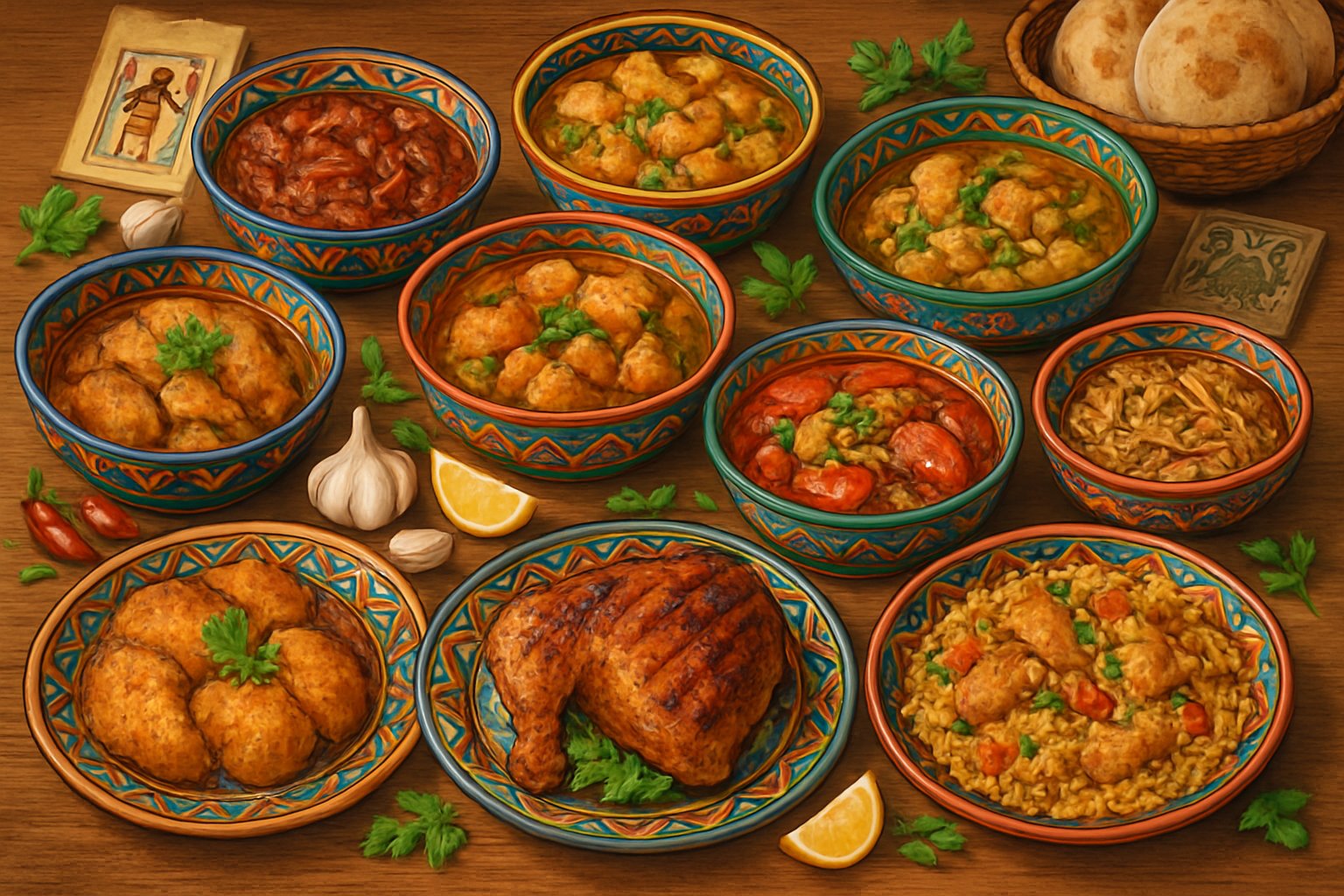
These 10 authentic Egyptian chicken dishes let home cooks dive straight into traditional recipes. The secret? Aromatic spices—think cumin, coriander, cardamom—and techniques that always seem to turn out tender, flavorful meals.
Chicken shawarma with its spice-packed punch, or the cozy molokhia stew made with jute leaves, each one has its own story. Egypt’s food is all about that blend of influences.
What’s amazing is how Egyptian chicken cooking uses simple ingredients to build deep, layered flavors. Garlic, onions, tomatoes, and a handful of warm spices—suddenly, plain chicken becomes something way more exciting.
Key Takeaways
- Egyptian chicken dishes fuse Mediterranean, Middle Eastern, and African flavors with classic spices and time-honored techniques.
- Ten standout recipes show off Egypt’s range, from street food to big family meals.
- You can totally recreate these flavors at home. Most recipes call for everyday ingredients and straightforward methods—spice blending and slow cooking do most of the magic.
What Makes Egyptian Chicken Dishes Unique?
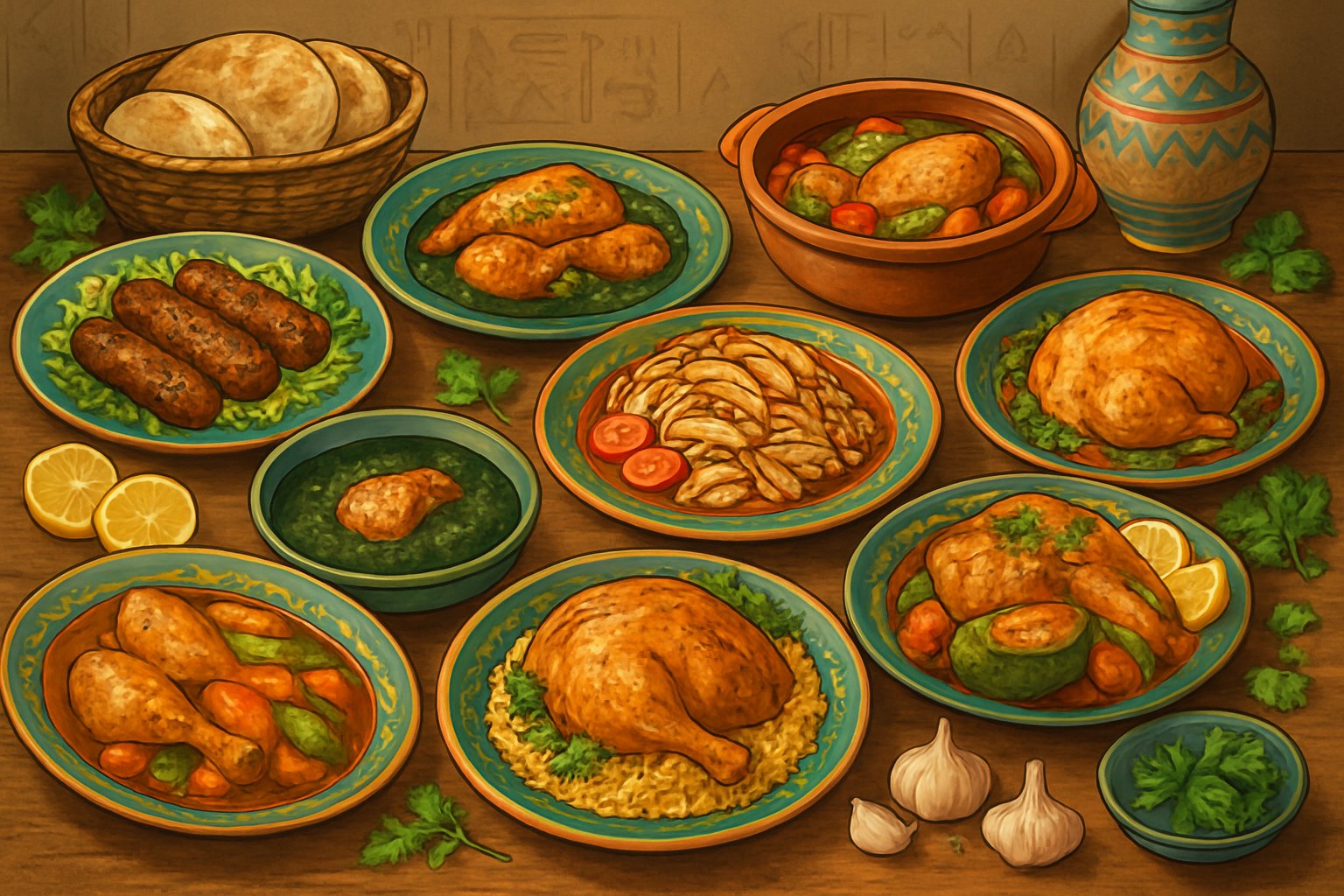
Egyptian chicken dishes really shine because cooks balance aromatic spices with old-school cooking techniques and a splash of Mediterranean flair. Core ingredients like cumin, coriander, and garlic do the heavy lifting for those layered flavors.
Staple Ingredients in Egyptian Cooking
Egyptian cuisine leans on ingredients that haven’t really changed in centuries. Garlic and onions are the backbone, giving chicken dishes that deep, savory base.
Lemon is everywhere in Egyptian cooking. It brightens things up and helps tenderize chicken, cutting through the heavier spices. Sometimes it’s fresh juice, sometimes preserved—depends on the recipe.
Tomatoes show up a lot too. They add natural sweetness and a bit of acidity, often simmered down into rich sauces that hug each piece of chicken.
Olive oil is the go-to for sautéing and roasting. It adds a subtle fruitiness and helps carry all those spice flavors. Vegetable broth is a common swap for water, making everything taste a little more robust.
Rice, bulgur, and flatbreads are the usual sides. They soak up the sauces and spices that give Egyptian chicken its signature vibe.
Key Techniques and Cooking Methods
Egyptian cooks know that patience pays off. Marinating is huge—chicken sits in spice blends for hours or even overnight, soaking up every bit of flavor.
Slow cooking is another favorite. Chicken simmers gently in covered pots, getting super tender and soaking up all the good stuff around it. Thighs and drumsticks especially benefit from this style.
Grilling over high heat brings out those classic tawook dishes. Quick cooking locks in juices and gives the chicken those irresistible char marks. A sprinkle of fresh herbs and a squeeze of lemon at the end? Always a good move.
Braising is a bit of a hybrid—brown the chicken first, then finish it in a bath of flavorful liquid. The result? Meat that’s falling-off-the-bone tender and smothered in a sauce that’s anything but boring.
The Role of Spices and Aromatics in Flavor
Spices are the heart and soul of Egyptian cooking. Cumin is everywhere, giving dishes that earthy, warm base. Its subtle bitterness balances out sweeter notes.
Coriander brings a bright, citrusy lift. Ground seeds go in spice blends, and fresh leaves usually finish things off.
Cinnamon adds a gentle sweetness—Egyptian cooks use it with a light hand, just enough to warm things up. Cardamom and allspice often tag along, especially in celebratory meals.
Baharat, the classic spice blend, mixes black pepper, cardamom, cloves, and nutmeg with the usual suspects. It’s a shortcut to big flavor.
Fresh herbs—parsley, cilantro, mint—show up in the pot and as a garnish. They add color, freshness, and just the right amount of aromatic punch.
10 Authentic Egyptian Chicken Dishes You Must Try
Egyptian chicken dishes blend bold spices with techniques that have stuck around for generations. Here are four classics that really capture Egypt’s range of flavors and textures.
Fattah: Festive Layers of Chicken, Rice, and Bread
Fattah turns humble ingredients into a celebration dish, usually making an appearance at weddings and holidays. The foundation? Crispy toasted bread pieces, fluffy rice, and juicy chicken stacked in layers.
Cooks boil the chicken with bay leaves, cardamom, and cinnamon sticks, saving the broth to cook the rice and whip up a flavorful sauce.
For the bread layer, day-old pita bread gets torn and toasted until golden. That crunch is key—it keeps things interesting.
| Layer | Main Ingredient | Key Seasoning |
|---|---|---|
| Bottom | Toasted pita bread | Garlic, vinegar |
| Middle | Egyptian rice | Chicken broth |
| Top | Boiled chicken | Bay leaves, cardamom |
A tangy tomato and vinegar sauce ties it all together. Don’t forget a squeeze of fresh lemon for a final bright note.
Molokhia with Chicken: Jute Leaf Stew
Molokhia is all about finely chopped jute leaves. The texture’s a bit slippery—some love it, some don’t—but it’s pure comfort food in Egypt.
The stew starts with chicken pieces simmered in seasoned broth. Toss in fresh or frozen jute leaves near the end so they stay green and keep their texture.
Takleya is the flavor bomb here—a quick fry of crushed garlic, coriander, and chili flakes in oil. Stir that into the pot just before serving.
You have to watch the clock. Jute leaves need only 10-15 minutes or they lose their color and that signature consistency.
Most families ladle molokhia over white rice and serve it with lemon wedges. The citrus brightens up the earthy stew.
Chicken Shawarma: Spiced Grilled Wraps
Shawarma is usually cooked on a vertical spit, but most home cooks just grill or pan-fry the marinated chicken. The marinade is where the magic happens: Middle Eastern spices and yogurt make the meat super tender.
Cumin, coriander, cinnamon, and paprika go into the mix. Garlic and lemon juice keep things lively.
Slice the chicken thin, marinate for hours, then grill or fry until the edges get a little crispy.
Wrap it all up in pita bread with tomatoes, cucumbers, onions, and a generous drizzle of tahini or garlic sauce.
Street vendors across Egypt sling shawarma all day. The combo of warm spices and cool veggies? It just works.
Mahshi Djej: Stuffed Chicken with Rice and Herbs
Mahshi djej is all about stuffing a whole chicken with herby rice. It’s a showstopper that proves Egyptian cooks are masters at combining grains, protein, and aromatics.
The stuffing is simple: short-grain rice, onions, parsley, dill, cilantro, with ground cinnamon and allspice for warmth.
You’ll need to loosen the chicken skin to tuck the stuffing underneath, as well as fill the cavity. It takes a bit of patience, but it’s worth it.
Slow roasting lets the chicken juices seep into the rice, keeping everything moist. The herbs release their oils and perfume the whole dish.
When it comes out of the oven, mahshi djej is golden and fragrant, with rice that’s soaked up every drop of flavor.
More Must-Try Egyptian Chicken Recipes
Here are three more dishes that show just how varied Egyptian chicken cooking can be. From tomato-rich stews to creative takes on comfort food and grilled classics, there’s plenty to love.
Chicken with Tomato Sauce and Spices
This stew is a weeknight hero—tender chicken in a tomato sauce loaded with Egyptian spices. It’s at the heart of a lot of family dinners.
Key Ingredients:
- Chicken thighs or drumsticks
- Canned tomatoes and tomato paste
- Onions and garlic
- Cumin, coriander, paprika, and black pepper
Start by browning the chicken in oil. Set it aside, then sauté onions until soft. Add garlic and cook for a minute.
Stir in tomato paste, let it get fragrant, then add canned tomatoes and your spices.
Put the chicken back in, pour in just enough water or broth to come halfway up, and simmer for 45 minutes until the sauce thickens and the chicken is tender.
Serve with Egyptian rice or warm pita. Some families like to toss in potatoes or green beans for extra heartiness.
Chicken Koshari: Egyptian Comfort Food Twist
Koshari is Egypt’s ultimate comfort food, but adding chicken takes it up a notch. This version packs in extra protein and flavor.
Start with the classic koshari base: cook rice, brown lentils, and pasta separately.
Chicken Preparation:
- Season chicken breast with cumin, coriander, and garlic powder
- Cook until golden, then slice into strips
- Set aside while you prep the rest
Sauté onions and garlic, then add tomato paste, diced tomatoes, and more cumin and coriander for the sauce.
To serve, layer rice and lentils, then pasta, and finally the chicken strips. Pour the spiced tomato sauce over the top.
Finish with crispy fried onions and a sprinkle of fresh herbs. It’s hearty, filling, and a fun twist on classic koshari.
Grilled Chicken Kofta
Egyptian kofta takes ground chicken and turns it into juicy, spiced patties, perfect for grilling.
Mix ground chicken with minced onions, garlic, and fresh parsley. Season with cumin, coriander, salt, and black pepper.
Essential Seasonings:
- 1 teaspoon ground cumin
- 1 teaspoon ground coriander
- ½ teaspoon allspice
- Fresh parsley and mint
Shape the mixture into small ovals or sausage-like pieces. Chill for half an hour so they hold together on the grill.
Grill over medium-high heat, about 4-5 minutes per side, until cooked through and nicely charred. Aim for an internal temp of 165°F.
Serve hot with tahini sauce, fresh veggies, and pita. A side of rice pilaf and a tomato-cucumber salad? Can’t go wrong.
Celebrated Flavors and Regional Varieties
Egyptian chicken dishes change a lot from region to region. Cairo’s street food scene is all about quick, punchy flavors, while Alexandria and Upper Egypt go for more elaborate, traditional takes.
Each area brings its own spin—different cooking methods, spice blends, and unique chicken specialties. It’s a lot to explore, honestly.
Cairo-Style Street Food Chicken Dishes
Cairo’s streets crackle with life, especially around the food stalls. Vendors serve up simple, crave-worthy chicken dishes that people just can’t seem to resist.
Shawarma dajaj is probably the king of Cairo street food. They marinate chicken with coriander, cinnamon, and a bunch of mixed spices, then roast it on those spinning vertical spits.
Street cooks usually stuff this seasoned chicken into fresh bread or wrap it up in thin flatbreads. Pickled veggies and a good slather of garlic sauce finish things off, making a quick, cheap lunch that fills you up fast.
You’ll spot grilled chicken wings on plenty of street corners. Vendors dust them with cumin, paprika, and a sprinkle of chili flakes before grilling them right over charcoal on the sidewalk.
Then there are Cairo’s puff pastry chicken pies. Bakers fill flaky pastry with spiced chicken and onions, selling these warm, buttery treats all day from tiny bakeries and carts.
Alexandrian and Upper Egyptian Chicken Specialties
Alexandria sits by the sea, and you can taste it in their chicken dishes. Cooks there use more herbs—think dill and parsley—and usually serve the chicken with rice cooked in broth.
Stuffed vegetables with chicken are everywhere in Alexandria. Families fill zucchini, peppers, and grape leaves with seasoned chicken and rice, then simmer everything in a tomatoey broth.
Up in Upper Egypt, things get heartier. Cooks make thick chicken stews with lentils and vegetables, leaning on warming spices like cinnamon and cardamom.
Molokhia with chicken is a local pride in Upper Egypt. Families simmer the leafy green with whole pieces of chicken, then serve it over rice with heaps of garlic and coriander.
Essential Ingredients for Egyptian Chicken Cooking
Egyptian chicken dishes lean on warm, earthy spices, fresh herbs, and quality grains. These basics build the flavors that make Egyptian poultry so unforgettable.
Common Spices and Herbs in Poultry Dishes
Cumin is the backbone of Egyptian chicken seasoning. Its warm, nutty taste shows up in almost every recipe—whole or ground, it’s everywhere.
Coriander brings a citrusy brightness that balances out cumin’s earthiness. Seeds work great in marinades, while ground coriander slides easily into spice rubs.
Turmeric gives chicken that golden glow and a mild, peppery kick. Plus, it’s got those anti-inflammatory benefits—always a bonus.
Paprika adds sweetness and a pop of red. Egyptian cooks usually reach for sweet paprika, not the fiery stuff.
Allspice brings warmth and a complex background—almost like cinnamon, nutmeg, and cloves had a meeting. Even a little bit totally transforms a basic chicken dish.
Cardamom pods add a floral, slightly sweet note. Green cardamom is the go-to, whole in rice or ground in a marinade.
Fresh parsley works as both ingredient and garnish. It cuts through rich, spiced chicken and makes everything feel a little fresher.
Staples: Grains, Beans, and Fresh Produce
Rice is the base for so many Egyptian chicken meals. Long-grain types like basmati soak up spices but still keep their shape.
Fava beans naturally pair with chicken in stews and sides. Fresh is best, but dried beans work fine if you soak them overnight.
Lentils bring protein and an earthy vibe. Red lentils cook fast and go creamy, while brown lentils keep their bite.
Yogurt does a lot of heavy lifting—tenderizing chicken in marinades, cooling down spicy flavors, and even making tangy sauces.
Onions and garlic are in pretty much every recipe as aromatic bases. Tomatoes bring that sweet acidity that just clicks with warm spices.
How to Cook Authentic Egyptian Chicken Dishes at Home
If you want to nail Egyptian cooking, it’s all about marinating right and getting those spice combos down. Tomato-based sauces with cumin and coriander are key, and you’ll want to serve them with rice or pita.
Preparation Tips and Cooking Techniques
Marinating is everything for authentic Egyptian chicken dishes. Mix olive oil, lemon juice, minced garlic, and yogurt for a solid base.
Here’s the core spice blend:
- Cumin – earthy warmth
- Coriander – citrusy lift
- Cinnamon – subtle sweetness
- Paprika – color and a gentle heat
Let the chicken soak in the marinade for at least 2 hours. If you can, leave it overnight—the flavor gets way deeper.
For grilled dishes like tawook, keep the heat medium to avoid burning. Chicken’s done at 165°F inside.
When you’re making one-pot dishes, brown the chicken first. You’ll get those tasty bits stuck to the pan that make the whole thing richer.
Roasting a whole chicken? Start high at 425°F for crispy skin, then drop it to 375°F. Baste every 20 minutes with pan juices mixed with lemon and herbs.
Making Traditional Sauces and Garnishes
Egyptian chicken dishes usually go with three main sauce styles. Tomato-based sauces are everywhere.
Basic Tomato Sauce:
- Sauté onions and garlic in olive oil
- Add crushed tomatoes, cumin, and coriander
- Simmer for 15-20 minutes until it thickens up
Lemon-herb sauces perk up heavier dishes. Just combine fresh lemon juice, olive oil, minced garlic, and chopped parsley or cilantro.
For a sweet twist, dates and honey bring in deep flavors. Toasted almonds or pistachios sprinkled on top add a nice crunch.
Tahini-based garnishes work well with grilled chicken. Mix tahini with lemon juice, garlic, and water until it’s smooth.
Don’t forget fresh herbs like parsley, cilantro, and mint. Toss them on right before serving so they stay bright and green.
Pairing with Classic Egyptian Sides
Rice is the main starch for most Egyptian chicken dishes. Basmati rice cooked with bay leaves and cinnamon sticks just tastes right.
Pita bread is on every table. Warm pita makes it easy to scoop up sauces and chicken for DIY bites.
Essential side dishes:
- Roasted eggplant – with garlic and olive oil
- Rice pilaf – with vermicelli and spices
- Cucumber salad – tossed in lemon and mint
Vegetables help balance out the richness of chicken. Grilled or roasted veggies with olive oil and herbs are always a good call.
Pickled veggies bring some acidity to cut through the fat. Turnips, carrots, and cucumbers are the usual suspects.
For special occasions, stuffed veggies like grape leaves or tiny eggplants show up. They take some prep, but they really make the meal feel authentic.
Popular Egyptian Accompaniments and Sides
Egyptian chicken dishes really come alive with the right sides—think rice, lentils, and warm pita bread. Bright sauces made with garlic, lemon, and tomatoes are the finishing touch.
Serving with Rice, Lentils, and Breads
Egyptian rice is the usual base for chicken. Cooks use butter or olive oil and season it with salt and spices.
Short-grain rice soaks up all the chicken juices. Some families toss in vermicelli noodles for a toasty, nutty flavor.
Lentils come in a bunch of forms. Red lentils cook down creamy, while brown lentils stay firm and earthy.
Beans like fava beans often join lentils for mixed sides. They’re filling and pack in extra protein.
Pita bread is a must at every meal. Soft, warm bread makes it easy to scoop up chicken and sauce.
Baladi bread, a thicker Egyptian flatbread, is even better for soaking up gravies. Some families serve both types together.
Iconic Sauces: Garlic, Lemon, and Tomato
Garlic sauce is everywhere. Cooks blend fresh garlic with olive oil, salt, and sometimes a bit of mayo for creaminess.
This white sauce cuts through the richness of chicken. Street vendors always have big bowls of it ready to go.
Lemon juice wakes up heavy dishes. Fresh lemon is squeezed right over chicken or mixed into marinades.
Preserved lemons bring a deeper, salty flavor to stews and tagines.
Tomato sauce is the base for a lot of chicken dishes. Cooks simmer tomatoes with onions, garlic, and spices.
You’ll find this sauce in dishes like chicken moussaka and stuffed veggies. The tangy sweetness works so well with savory chicken.
Classic Egyptian Desserts to Complete the Meal
Egyptian meals usually wrap up with traditional sweets that mix semolina, nuts, and rich textures. Simple ingredients like coconut flakes and almonds turn into something memorable.
Basbousa: Semolina Cake with Coconut Flakes
Basbousa is Egypt’s favorite semolina cake. It’s golden, moist, and soaked in sweet syrup, with coconut flakes mixed right in.
Coarse semolina gives it a unique crumb—not like regular cake flour. Bakers combine semolina with melted butter, sugar, and milk to make a thick batter.
Coconut flakes add chew and sweetness to every bite. Most recipes call for unsweetened coconut right in the mix.
After baking, hot sugar syrup gets poured over the cake. The syrup usually has sugar, water, and sometimes a splash of lemon juice or honey.
Key ingredients:
- 2 cups semolina flour
- 1 cup coconut flakes
- 1/2 cup melted butter
- Simple sugar syrup
Basbousa tastes even better after a day or two, once the syrup soaks in.
Om Ali: Bread Pudding with Nuts
Om Ali is Egypt’s answer to bread pudding. It’s warm, creamy, and loaded with nuts and coconut.
The base is torn puff pastry, croissants, or rusks, toasted until golden and crisp.
Hot milk and heavy cream get poured over the bread, softening it but leaving some texture.
Almonds, hazelnuts, and pistachios go on top for crunch and flavor. Most cooks mix up the nuts for variety.
Coconut flakes and raisins usually join in, adding sweetness and a chewy bite.
Assembly steps:
- Toast bread pieces until golden
- Add nuts, coconut, and raisins
- Pour hot sweetened milk over everything
- Serve hot, straight from the oven
It’s best when it’s still bubbling and fresh out of the oven.
Frequently Asked Questions
Egyptian chicken dishes depend on specific spice blends and cooking techniques for their signature flavors. Some recipes are beginner-friendly, while others need special ingredients and a bit more effort.
What are the classic spices and herbs used in traditional Egyptian chicken recipes?
Egyptian chicken dishes stick to a core group of spices—cumin, coriander, and baharat spice blend are the main ones.
Fresh parsley, cilantro, and mint are the usual herbs. They add a pop of brightness to slow-cooked dishes.
Garlic and onions show up in basically every recipe, laying down the base flavors.
Cardamom, cinnamon, and allspice add warmth, especially in dishes like molokhia chicken. Egypt’s spice trade history really shines here.
How do you prepare Hawawshi at home?
For Hawawshi, mix ground meat with chicken and stuff it into pita bread. The filling blends minced chicken, lamb, onions, and spices.
Season the meat with cumin, black pepper, and chopped herbs. Salt and a bit of tomato paste keep it juicy.
Stuff the mixture into halved pita bread, then press the edges to seal.
Cook the stuffed bread in a hot oven or on a griddle. Each side needs about 5-7 minutes until the bread turns golden and the meat cooks through.
What are some simple Egyptian chicken dishes for beginners to make?
Shish tawook is a great place to start if you want to try Egyptian chicken at home. You just marinate chicken cubes in yogurt, lemon juice, and a handful of spices, then grill them up.
Egyptian roast chicken keeps things simple. All you need are some basic spices and an oven—just rub the chicken with cumin, garlic, and lemon, then roast.
Chicken rice pilaf is a classic one-pot meal. Toss chicken pieces and rice with a few everyday seasonings, and you’ll have dinner in about 45 minutes.
Grilled chicken with tahini sauce is another easy option. Marinate the chicken, grill it, and serve with a quick sesame paste sauce.
Can you recommend a famous Egyptian chicken dish served for breakfast?
Fatteh with chicken is a favorite Egyptian breakfast. It’s a comforting mix of toasted bread, rice, and shredded chicken, all topped with a creamy yogurt sauce.
Start with crispy pita bread at the bottom of the bowl. Add cooked rice, and then layer on warm shredded chicken.
Pour over a tangy garlic yogurt sauce. Sometimes there’s a splash of vinegar and a little chicken broth mixed in.
Finish with fried nuts and fresh herbs for garnish. Pine nuts and parsley give the dish a pop of color and crunch.
What are some Lebanese chicken recipes that are similar to Egyptian cuisine?
Lebanese chicken shawarma feels pretty close to Egyptian versions. Both rely on similar spice blends and usually get tucked into pita bread (here’s a quick guide).
Chicken kebabs show up in both cuisines, though Lebanese cooks lean heavier on lemon, while Egyptians seem to love cumin.
Stuffed chicken dishes cross over, too. Lebanese recipes might pack in rice and nuts, and Egyptian cooks sometimes swap in other grains.
Both countries make chicken stews with vegetables. The spices overlap, but each one throws in its own twist—maybe that’s what makes it interesting.
How do Middle Eastern chicken dishes differ from traditional Egyptian recipes?
Egyptian chicken dishes lean into African-influenced spices more than other Middle Eastern cuisines. You’ll notice different heat levels and some unique spice blends.
Turkish chicken often gets a yogurt marinade and sometimes uses unexpected cooking techniques. In contrast, Egyptian recipes stick with dry spice rubs and usually go for slow cooking.
Persian chicken recipes bring in pomegranate and saffron pretty often. Egyptian cooks don’t reach for those as much—they tend to favor cumin and coriander.
Syrian and Lebanese chicken dishes have a few things in common with Egyptian food. Still, Egyptian recipes will sometimes throw in ingredients like molokhia, which you won’t really see elsewhere.
Related posts:
 Egyptian Fino Bread: Baking the Traditional Soft Rolls at Home
 What Food Is Saudi Famous For? (Explained)
 5 Iconic Egyptian Street Foods to Try (and How to Make Them at Home)
Koshari: The Ultimate Guide to Egypt’s Beloved Street Food
5 Iconic Egyptian Street Foods to Try (and How to Make Them at Home)
Koshari: The Ultimate Guide to Egypt’s Beloved Street Food
 10 Classic Egyptian Desserts to Satisfy Your Sweet Tooth: Authentic Recipes & Traditions


