Egyptian desserts? They’re some of the world’s most captivating sweets—a tradition that goes back thousands of years, mixing ancient culinary wisdom with flavors that just linger in your memory. You’ll find semolina, nuts, honey, fragrant spices, and a vibe that’s hard to forget.
From Cairo’s busy streets to family kitchens along the Nile Delta, these treats aren’t just food—they’re woven into the fabric of Egyptian life and celebration.
Egyptian sweets give home bakers the chance to turn pantry staples into something truly special. You don’t need a plane ticket to taste authentic flavors—just a little curiosity and a few basic ingredients like flour, milk, sugar, and nuts.
These recipes have survived generations. People hand down the techniques, keeping the soul of each dessert alive.
Egyptian dessert culture shows up at religious celebrations, family get-togethers, and honestly, just everyday life. During Ramadan, qatayef and kunafa fill the air with sweet, tempting smells.
Special occasions? They call for elaborate sweets that bring everyone to the table.
Key Takeaways
- Egyptian desserts mix ancient traditions with ingredients you probably have at home.
- These sweets are front and center at Egyptian celebrations—Ramadan, holidays, or just a family night.
- The classics feature semolina, nuts, honey, and spices that give Middle Eastern desserts their unmistakable flavor.
The Signature Egyptian Desserts You Must Try
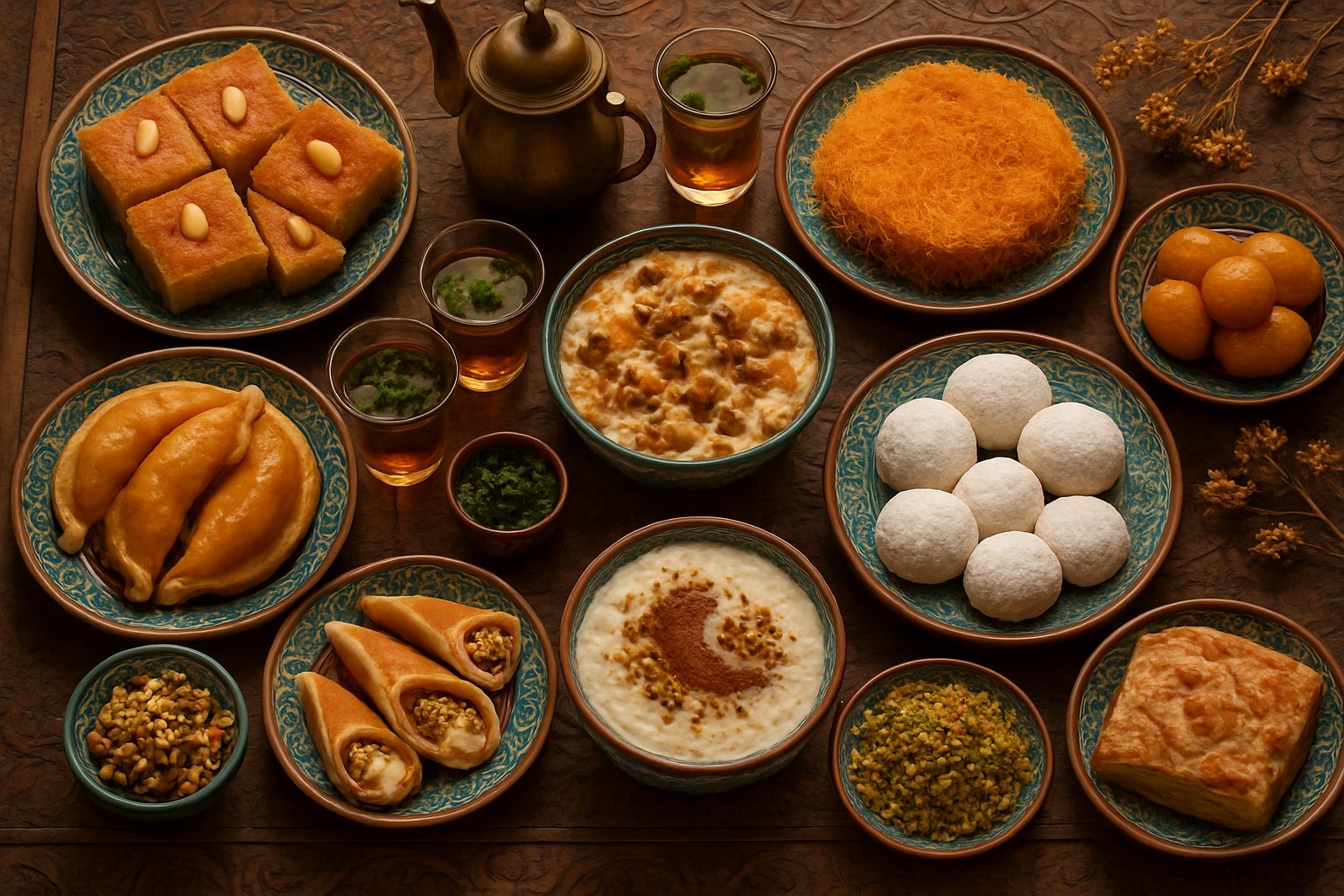
Let’s talk about four desserts that really capture the heart of Egyptian sweets. From creamy puddings to crispy, nutty pastries, there’s a little something for every craving.
Om Ali: Egypt’s Iconic Bread Pudding
Om Ali is Egypt’s best-loved dessert—think cozy bread pudding, but with an Egyptian twist. You tear up phyllo or puff pastry, soak it in hot milk and cream, and go wild with nuts.
You get:
- Phyllo pastry or puff pastry pieces
- Whole milk and heavy cream
- Mixed nuts (almonds, pistachios, hazelnuts)
- Raisins and coconut flakes
- Sugar and vanilla
Bake the pastry until golden, then drown it in sweet, hot milk. Toss in nuts and raisins, then bake again.
Om Ali arrives hot, usually in little bowls. The soft, milky pastry and crunchy nuts are just—well, you’ll know when you try it.
Basbousa: The Beloved Semolina Cake
Basbousa is the semolina cake that everyone in Egypt seems to adore. It’s moist, thanks to yogurt and coconut, and soaks up syrup like a sponge.
Here’s what you need:
- Coarse semolina flour
- Plain yogurt
- Shredded coconut
- Sugar syrup with rose water
- Almonds for decoration
No eggs—just mix, bake, and pour cool syrup over the hot cake. The grainy texture from semolina is what makes it stand out.
Basbousa gets cut into diamonds and topped with blanched almonds. It’s sweet, but not in an over-the-top way.
Kunafa: Crispy and Creamy Phyllo Delight
Kunafa is all about crispy shredded phyllo wrapped around a creamy filling. It’s a show-off dessert, honestly.
You’ll need:
- Shredded phyllo dough (kataifi)
- Sweet cheese or thick cream
- Melted ghee or clarified butter
- Sugar syrup with orange blossom water
- Crushed pistachios
Mix the phyllo with ghee, layer it in a pan, add the filling, and top it off with more phyllo. Bake until golden.
The crunch from the phyllo and the soft, gooey middle? That’s the magic. People experiment with new fillings—mango, Nutella—but the classic cheese version still rules.
Baklava: Layered Nutty Pastry
Egyptian baklava stacks up paper-thin phyllo with ghee and loads of chopped nuts. The result: flaky, nutty, and just the right amount of sweet.
You’ll need:
- Phyllo pastry sheets
- Mixed nuts (almonds, pistachios, walnuts)
- Clarified butter or ghee
- Honey-based syrup
- Cinnamon and cardamom
Layer the phyllo with ghee, scatter nuts, repeat, then cut into diamonds or squares before baking. That’s not just for looks—it helps the syrup soak in.
After baking, pour on the cooled honey syrup. Egyptian baklava often packs in more nuts than other versions, making it extra rich.
More Decadent Egyptian Sweets to Explore
Egyptian bakeries are treasure troves for anyone with a sweet tooth. You’ll find treats that go back centuries, combining simple ingredients with a whole lot of skill.
Kahk: Festive Eid Cookies
Kahk is the cookie of Eid. It’s crumbly, tender, and just melts as soon as you bite in.
The basics:
- Flour, butter, powdered sugar
- Milk powder for richness (if you’re feeling fancy)
Fillings vary:
- Date paste (classic)
- Chopped nuts (pistachios, walnuts)
- Or just keep it plain and dust with powdered sugar
Families bake huge batches before Eid. Some shape them into rounds, others go for crescents, and many press in pretty patterns with wooden molds.
Ghorayeba: Melt-in-Your-Mouth Shortbread
Ghorayeba is simple: flour, clarified butter, powdered sugar. That’s it.
Mix butter and sugar until fluffy, add flour, shape into balls, press with your thumb, and bake until just golden at the edges.
Top each with an almond or pistachio for a bit of crunch. They dissolve in your mouth, and honestly, they’re kind of addictive.
These cookies stay good for days—if they last that long.
Jalebi and Meshabek: Egypt’s Crispy Syrup Twists
Jalebi gets its signature spirals by pouring batter through a funnel in hot oil. Meshabek, on the other hand, forms lacy webs.
The batter uses flour, yogurt, and a dash of turmeric for color. Let it ferment for that tangy kick.
For the syrup:
- Boil sugar and water
- Add rose water for fragrance
- Lemon juice keeps it from crystallizing
Eat these warm, straight from the vendor, with syrup still dripping. Cairo’s street sellers make them fresh, and the crispy-sweet combo is hard to beat.
Classic Egyptian Puddings and Creamy Desserts
Egyptian puddings are all about comfort—milk, rice, sugar, and a few extras. They’re creamy, rich, and perfect for any occasion.
Roz Bel Laban: Creamy Rice Pudding
Roz bel laban is Egypt’s go-to rice pudding. Short-grain rice simmers in whole milk until it’s thick and velvety.
You’ll need:
- Whole milk (4 cups)
- Short-grain rice (1/2 cup)
- Sugar (1/3 cup)
- Vanilla extract (1 teaspoon)
Simmer the rice in milk for about 45 minutes, stirring so it doesn’t stick. The pudding thickens as the rice releases its starch.
Some families add raisins or coconut flakes. Garnish with pistachios if you want to get fancy.
Chill before serving. During Ramadan, it’s a popular way to break the fast—comforting and filling.
Mahalabia: Delicate Milk Pudding
Mahalabia is lighter than rice pudding, with a silky, almost custard-like feel. Cornstarch or rice flour thickens the milk.
Mix milk, sugar, and cornstarch, cook until thick, then add rose water or vanilla. Pour into cups, let cool, and unmold if you’re feeling ambitious.
Top with chopped pistachios, honey, or a bit of cinnamon. It’s a gentle, milky dessert that’s easy on the palate and loved by kids and adults alike.
Most Egyptian restaurants offer mahalabia as a light finish to a meal. It’s the kind of dessert you reach for when you want something sweet but not heavy.
Essential Ingredients in Traditional Egyptian Dessert Recipes
Egyptian desserts rely on a handful of ingredients that set them apart. Nuts, semolina, and fragrant syrups play starring roles.
Nuts, Dried Fruits, and Aromatics
Nuts are everywhere—almonds in basbousa, pistachios in kunafa, walnuts in pastries. They add crunch, color, and a touch of luxury.
Coconut flakes show up in cakes and as toppings, giving a subtle sweetness.
Dried fruits, especially raisins and dates, add chewiness and natural sugar. You’ll find them in puddings, cookies, and cake fillings.
Rose water and orange blossom water? They’re the secret to that unmistakable aroma. A splash transforms a simple dessert into something special.
Signature Flours and Grains
Semolina is the backbone of Egyptian baking. It gives basbousa and other cakes their signature texture and soaks up syrup like nothing else.
Regular flour is for pastries and cookies—think phyllo dough, kahk, and shortbread.
Semolina absorbs more liquid and makes for denser, heartier desserts. The grain size affects how much syrup the dessert can handle.
Most recipes blend these grains with dairy for a rich, satisfying bite.
Sweeteners and Syrups
Sugar is everywhere, in all forms—white sugar for batters, powdered sugar for dusting, honey for syrups.
Egyptian syrups are usually a mix of sugar, water, and sometimes honey, poured over desserts while they’re still hot.
Rose water or orange blossom water often goes into the syrup, giving it depth and a floral note that lingers.
That hot-and-cold syrup moment? It’s what makes Egyptian desserts so irresistible.
Techniques and Traditions Behind Egyptian Sweets
Egyptian desserts come from two main methods that give them their famous textures and bold flavors. Bakers get creative with careful layering and syrup soaking, while spices and floral waters round out the taste.
Layering and Syrup Soaking Methods
Most Egyptian desserts start with layering techniques that take some patience. For kunafa, bakers spread shredded pastry dough into thin layers, brushing each with melted ghee to keep things from sticking.
After baking, the magic happens with syrup soaking. Bakers pour a thick sugar syrup over the hot dessert, letting it seep through every layer.
The trick is to use hot syrup on cool desserts or cool syrup on hot desserts. That temperature difference really helps the syrup soak in, instead of just sitting on top.
Timing is everything here. Soak too long and the dessert turns mushy. Not long enough? It stays dry and crumbly.
The Art of Flavoring: Spices and Floral Waters
Egyptian bakers lean on spices and floral waters for those signature flavors. Cardamom and cinnamon show up in most old-school recipes, either ground into the mix or steeped in syrup. Ground cardamom works well in cookies, while whole pods flavor milk desserts.
Rose water and orange blossom water bring in those floral notes. Bakers use them in syrups, creams, and doughs, but they go easy—just a few drops, or it gets overpowering.
Vanilla lingers in the background, boosting other flavors. Bakers love pairing vanilla with rose water or cardamom for a layered taste. Ghee adds richness and carries all these flavors through the dessert.
Balance is everything. Too much floral water and the dessert tastes like soap. Too little and it falls flat. Most bakers taste and tweak the syrup before finishing up.
The Role of Sweets in Egyptian Culture and Festivities
Egyptian desserts are more than food—they’re woven into religious ceremonies and family gatherings. Sweets also pop up in daily hospitality across Egypt.
Religious and Family Celebrations
Sweets really shine during religious holidays like Ramadan and Eid. When Ramadan rolls around, families break fast with treats like qatayef pancakes and kunafa.
Street vendors work late to keep up with the iftar rush. The smell of fresh desserts drifts through neighborhoods.
Kahk cookies are Eid staples. Families spend days making these, filling them with dates, nuts, or sweet paste. Those wooden molds? They turn every cookie into a tiny work of art.
Om Ali is a must at weddings and big family events. This warm bread pudding brings everyone to the table. Hosts serve it to honor their guests.
Religious festivals keep local bakeries busy. Some shops stay open all night during holy months just to meet demand.
Everyday Dessert Customs
Egyptian families love welcoming guests with sweets. Hosts usually offer a bite of dessert with tea or coffee.
Parents often pick up pastries from the bakery for their kids. These treats can be rewards for good grades or just because.
Neighborhood bakeries double as social hubs. People catch up with friends while grabbing their daily desserts.
Rice pudding and basbousa are regulars on the family table. No need for a special occasion—sometimes you just want something sweet.
Dessert culture here is all about sharing. Big platters make it easy for everyone to dig in together.
Making Egyptian Desserts at Home: Tips and Recipe Inspiration
You don’t need fancy skills to make Egyptian desserts at home. The ingredients are simple, and the techniques are pretty approachable. Just get to know key ingredients like semolina and phyllo pastry, and you’re halfway there.
Authentic Recipe Tips for Beginners
If you’re just starting out, try basbousa or ghorayeba. They teach the basics without being overwhelming.
With semolina, add liquids slowly to avoid lumps. Let the batter rest about 30 minutes before baking, so it hydrates properly.
Phyllo pastry needs gentle hands. Cover unused sheets with a damp towel, and brush each layer with ghee or melted butter for that authentic flavor.
Let sugar syrups cool before pouring them on desserts. Hot syrup on hot pastry leads to sogginess. Make the syrup ahead and let it sit out.
Keep an eye on oven temps. Most Egyptian sweets bake at around 350°F—hot enough to cook through, but not so hot they burn.
Sourcing Ingredients and Substitutions
Middle Eastern markets usually have the good stuff—fine semolina, ghee, and all that. Online shops are a solid backup for specialty ingredients.
If you don’t have ghee, make your own clarified butter. Just melt butter and skim off the milk solids.
Fine semolina works best for most Egyptian desserts. You can usually find it in the baking or international aisle.
Rose water and orange blossom water are powerful—start with a little. Vanilla extract can fill in if you’re out of floral waters.
Phyllo pastry keeps well in the freezer and thaws fast. Grab extra when you see it, so you’re ready for last-minute baking.
Frequently Asked Questions
Egyptian desserts use familiar ingredients like nuts, honey, and semolina. Many recipes go back centuries, and you can make most of them at home with regular groceries.
What are traditional Egyptian desserts that one must try?
Basbousa is a classic—semolina cake soaked in syrup, with just the right sweetness and texture.
Konafa is another must. The shredded pastry gets filled with cheese or nuts for a crispy outside and creamy middle.
Om Ali is Egypt’s famous bread pudding. It’s loaded with milk, nuts, and raisins—a real comfort dessert.
Ma’amoul cookies, filled with dates and nuts, show up for special occasions. The molded shapes and rich flavors are unforgettable.
How can one make authentic Egyptian desserts at home?
Most recipes use easy-to-find ingredients: semolina, phyllo dough, nuts, honey.
Sugar syrup is key. Cool the syrup before pouring it over hot desserts, or you’ll end up with a soggy mess.
Rosewater and orange blossom water bring in that traditional flavor—just use a small amount.
Some desserts need time to soak. Let basbousa sit with syrup for at least 30 minutes before serving.
What are some simple Egyptian dessert recipes for beginners?
Rice pudding is probably the easiest. You just need milk, rice, sugar, and maybe a pinch of cinnamon.
Basbousa is beginner-friendly too. Mix semolina, yogurt, and sugar, bake, and soak with syrup.
Egyptian couscous dessert is super simple—just butter, sugar, and nuts with couscous.
If you use ready-made phyllo, konafa gets a lot easier. Focus on the filling and syrup, skip the hassle of making pastry from scratch.
Which ancient Egyptian sweets are still popular today?
Zalabya has been around forever—fried dough spirals soaked in syrup, still a street food favorite.
Lokma is another old-school treat. These little fried dough balls covered in syrup show up at festivals.
Kahk cookies go way back. These ring-shaped cookies stuffed with dates or nuts are a holiday essential.
Honey-based sweets speak to Egypt’s ancient love for beekeeping. Lots of old recipes still use honey as the main sweetener.
Where can I find Egyptian dessert recipes with original flavors?
Cairo’s traditional sweet shops, like El Abd, stick to authentic methods. Some even share their recipes with customers.
Middle Eastern restaurants around the world serve Egyptian desserts made the old way. Many chefs learned from family traditions.
There are cookbooks just for Egyptian sweets, often with stories and history alongside the recipes.
Online Egyptian food communities are gold mines for family recipes and regional tips. You’ll find plenty of variety and insider tricks.
What are the names of desserts typically served during Egyptian festivities?
Qatayef pancakes pretty much take over Ramadan tables. People stuff these pancakes with cheese, nuts, or cream, and you’ll find them at nearly every iftar.
Ma’amoul cookies pop up during Eid in most Egyptian homes. They’re filled with dates or nuts, and honestly, they just feel like a celebration in cookie form.
Kahk cookies are another Eid staple. Families bake huge batches, then hand them out to neighbors and whoever happens to drop by.
Konafa shows up at weddings and other big events. It takes some effort to make, so folks usually save it for moments that matter.
Basbousa gets served at all kinds of gatherings. It’s easy to make, always a hit, and just feels right for family get-togethers.